
Du 14 mars au 08 juin 2025
ALBERTO GIACOMETTI / PETRIT HALILAJ. NOUS CONSTRUISIONS UN FANTASTIQUE PALAIS LA NUIT...
Paris, France
Entreprise, fondation ou particuliers, vous pouvez soutenir les activités
de la Fondation Giacometti.
FONDATION GIACOMETTI
3 bis cour de Rohan
75006 Paris
+33 (0) 01 44 54 52 44
INSTITUT GIACOMETTI
5 Rue Victor Schoelcher
75014 Paris
« Les enfants ont une telle assurance… On se croit là pour toujours. Qui d’ailleurs n’a pas l’air de se croire là pour toujours ? Tout est devenu fragile pour moi à vingt ans1 »
Alberto Giacometti, 1963
L’exposition « Nous construisions un fantastique palais la nuit… » présentée à l’Institut Giacometti met en dialogue les œuvres de l’artiste contemporain Petrit Halilaj et celles d’Alberto Giacometti.
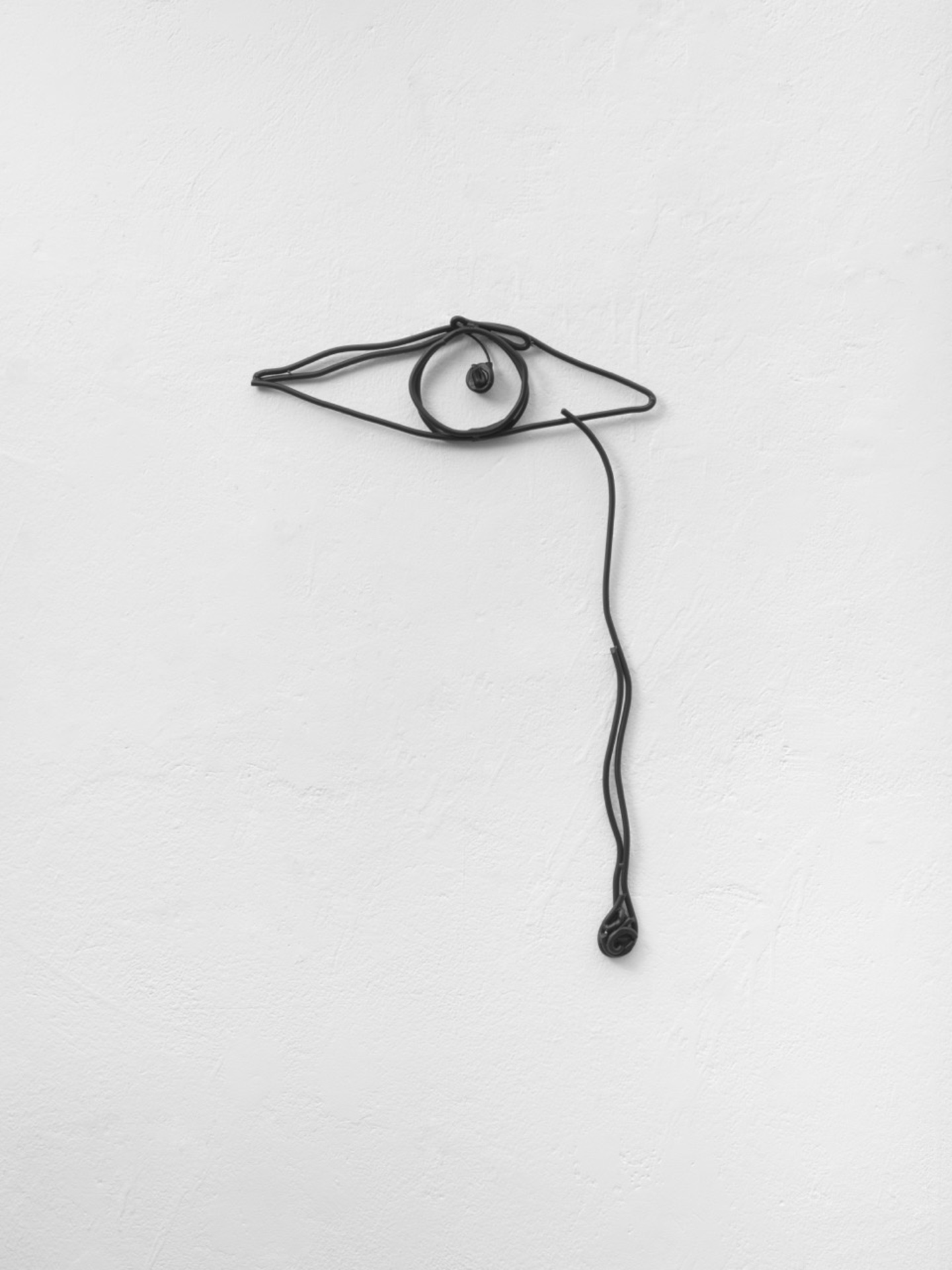
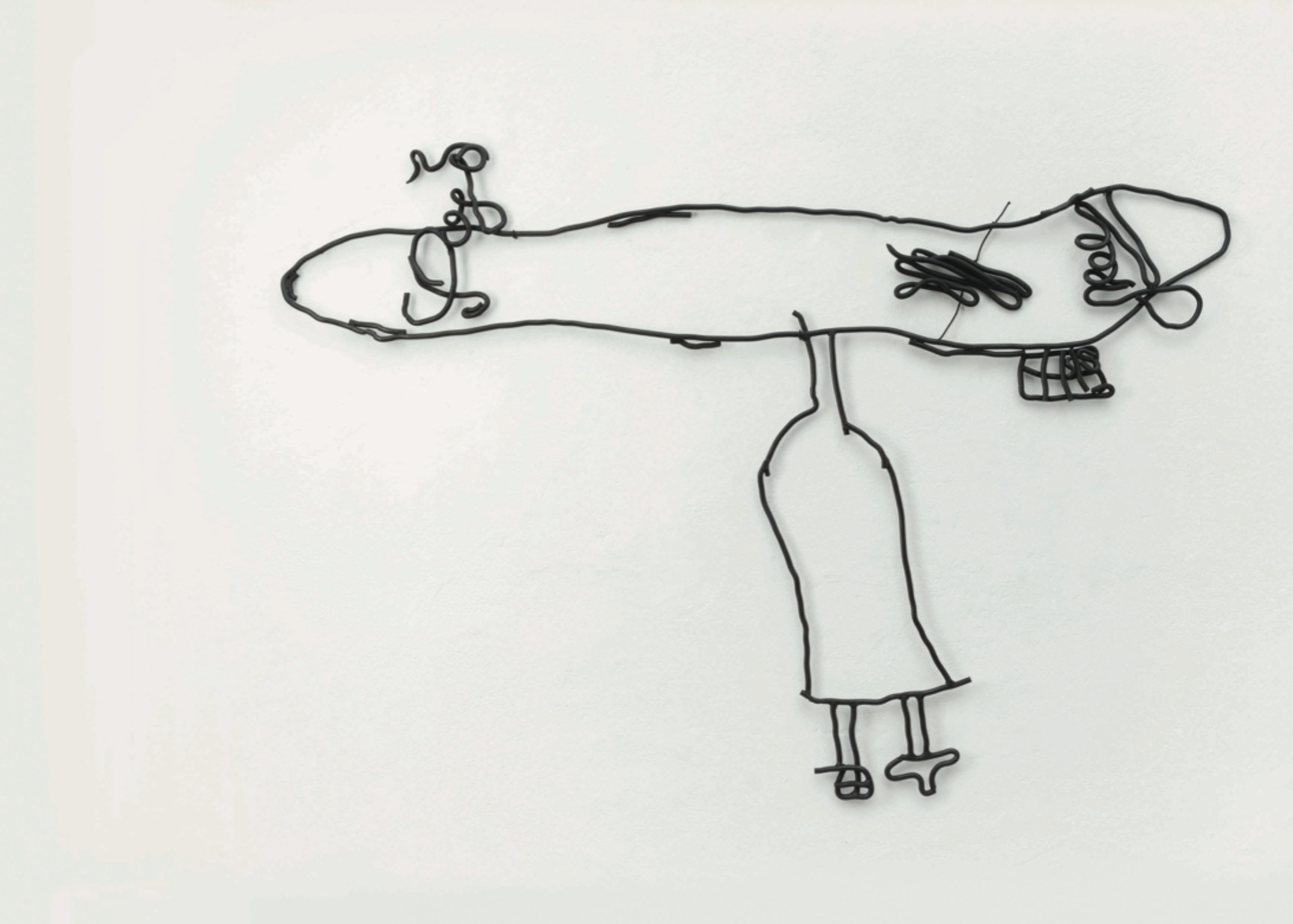
Marqué par son enfance dans un Kosovo en guerre, Petrit Halilaj développe une pratique où les histoires individuelles et collectives se croisent. Progressivement, le dessin, et plus singulièrement celui des enfants, est devenu pour lui un langage de prédilection, une langue à entretenir. À partir de 2015, il en retrouve le chemin en inventant un nouveau vocabulaire graphique, pour lequel il transforme des dessins d’enfants en dessins dans l’espace. Il les appelle « Abetare », nom repris d'un manuel d’apprentissage de l’alphabet très répandu au Kosovo.
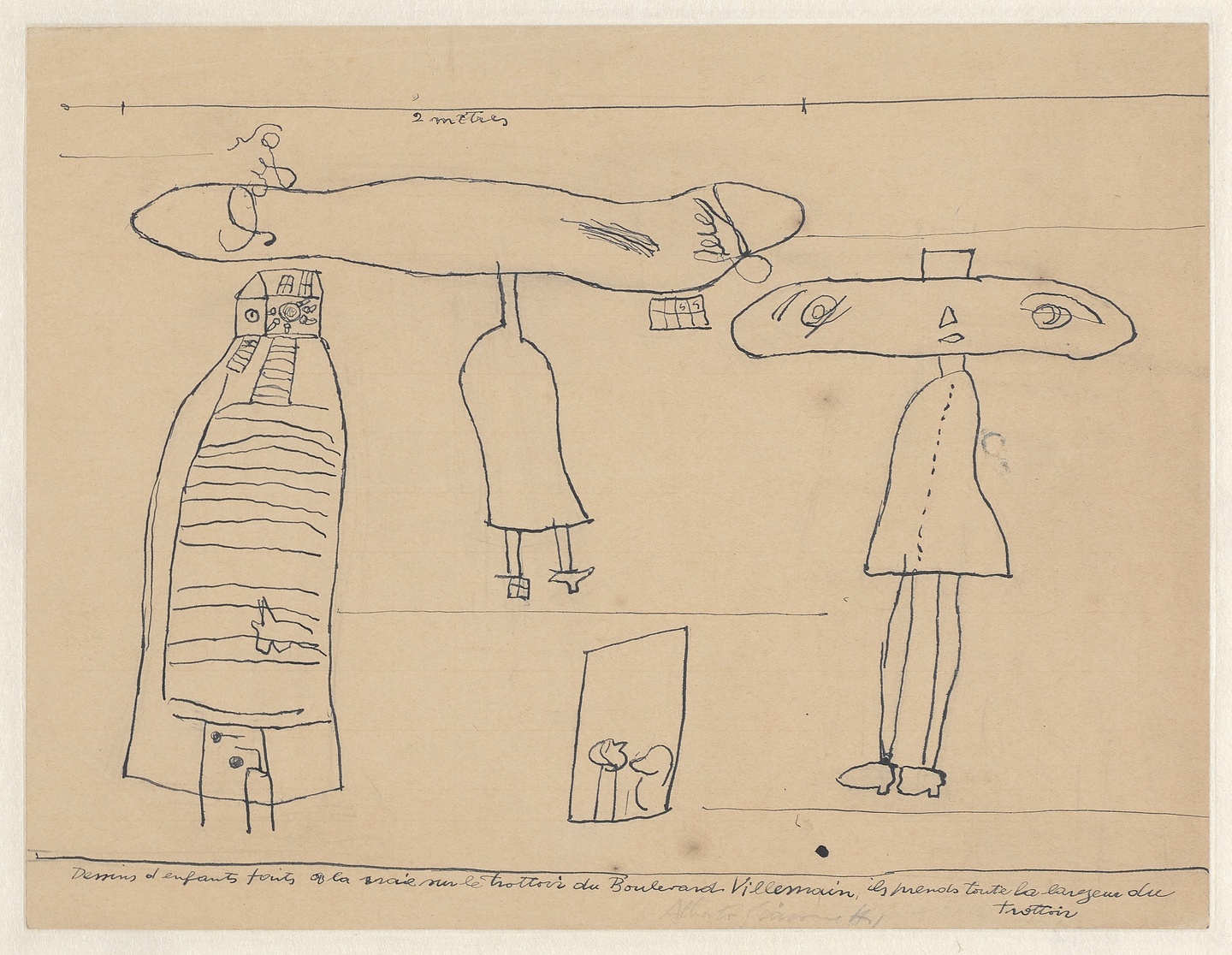
En 1932, Giacometti copie un dessin d’enfant vu sur un trottoir de son quartier, avenue Villemain dans le 14e arrondissement de Paris. À partir de ce dessin, Halilaj noue un dialogue et révèle, au travers d’une trentaine d’œuvres créées pour l’exposition, la présence du thème de l’enfance chez son aîné.
Prenant appui sur un texte de Giacometti à partir de son œuvre Le Palais à 4h du matin (1932), l’exposition et son titre explorent la force des constructions fantasmatiques et fragiles des œuvres des deux artistes. Depuis l'installation originale pensée par Halilaj, l’exposition tisse un réseau subtil de liens entre des œuvres de Giacometti. Le tracé de Halilaj prolonge et associe celui des enfants comme celui de Giacometti, et les livre aux visiteurs. D’une main à l’autre, le dessin est un vecteur de dialogue entre les individus et leurs imaginaires que l’artiste déploie dans les formes plutôt que dans les mots. Il permet d’ouvrir l’imagination, sans imposer de signification.
« Quand on parle de dessin, on parle d’imagination, et c’est ce que je ressens depuis mon enfance », souligne Halilaj. L’artiste entretient depuis son plus jeune âge un rapport intense au dessin, et sa vocation artistique fut précipitée par le conflit au Kosovo (1998-1999) qui déchira les populations et déplaça l’enfant qu’il était de villages en camps.
Dans le camp de réfugiés de Kukës, en Albanie, il attira les regards par sa passion pour le dessin et sa capacité à le pratiquer à deux mains, une passion qu’encouragea le psychologue italien Giacomo « Angelo » Poli. Halilaj retrouvait dans le médium graphique les moyens de rendre compte et de surmonter le traumatisme de la guerre. Progressivement, le dessin, et plus singulièrement celui des enfants, est devenu son langage de prédilection ; ainsi élabore-t-il à partir de 2015, avec les « Abetare », une nouvelle langue graphique, avec laquelle il transforme des dessins d’enfants en dessin dans l’espace.
Depuis Genève, où il est retenu par la guerre dès 1941, Giacometti retrouve sa mère et son neveu Silvio, dont il réalise de nombreux portraits sculptés et dessinés. Dans quelques carnets, il s’adonne à un exercice inédit : il invite l’enfant à dessiner sur les feuilles sur lesquelles sa silhouette est esquissée. Au travers de plusieurs carnets s’établit un dialogue entre le neveu et son oncle, dans une série de dessins à quatre mains d’une grâce rare. Halilaj prolonge ce dialogue graphique avec sa nièce Luna.
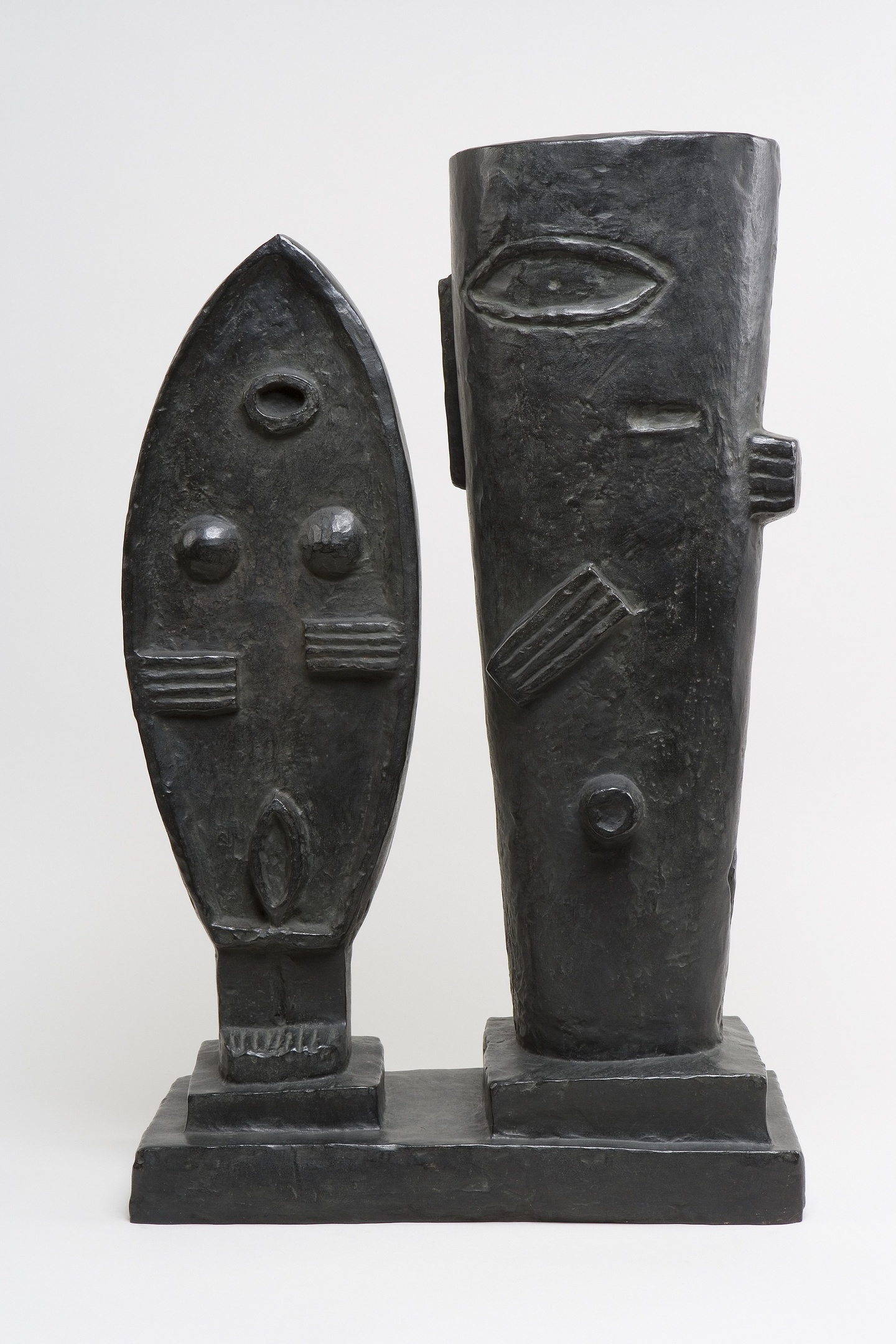
Le Palais, monumental dessin dans l’espace, se déploie dans la salle principale de l’Institut Giacometti. Tel un rêve, il relie des moments et des idées séparés, permettant ainsi l’association de plusieurs œuvres de Giacometti entre elles : Couple (1926), Mère et fille (1933), l’Apollon (1929) ou encore un bonhomme dans le dessin d’enfant recopié par l’artiste en 1932.
« Je ne puis parler qu’indirectement de mes sculptures et espérer dire que partiellement ce qui les a motivées », écrit Giacometti en 1933, commentant son œuvre Le Palais à 4 heures du matin (1932). Puis de prolonger : « Nous construisions un fantastique palais dans la nuit […], un très fragile palais d’allumettes : au moindre faux mouvement, toute une partie de la minuscule construction s’écroulait ; nous la recommencions toujours. »
Halilaj s’identifie à cette forme précaire : « C’est le fil conducteur entre toutes les maisons dans lesquelles j’ai vécu et que ma famille et moi avons perdues, ou que nous avons dû quitter, et que nous avons essayé de reconstruire : celle de Runik [Kosovo], après la guerre, puis, en 2010, la maison familiale de Pristina. Pour cette exposition, l’idée de construire un palais de rêve pour y vivre m’est immédiatement venue à l’esprit. »
Halilaj partage avec Giacometti l’attachement au regard de l’enfant sur l’adulte. Halilaj a bénéficié, enfant, du soutien inconditionnel de sa mère dans sa vocation artistique naissante, comme ce fut le cas pour Giacometti avec ses deux parents. La figure du père est importante pour l’un comme pour l’autre, mais de manière différente, entre révérence et défiance.
Abetare (Le coq de Giacometti) (2025) prend la forme d’un personnage narquois qui toise un portrait de Giovanni Giacometti, le père de l’artiste. Abetare (La causeuse de Giacometti) (2025) est tiré d’une feuille dessinée sur laquelle Giacometti recouvre le portrait de son père de sculptures imaginaires.
Les deux artistes entretiennent dans leur œuvre un dialogue entre dessin et sculpture.
Chez Giacometti, certaines sculptures, comme Portrait du père (1927-1930) ou Figure qui marche (1927), proposent, de la même manière que chez Halilaj, une forme hybride entre dessin et sculpture.
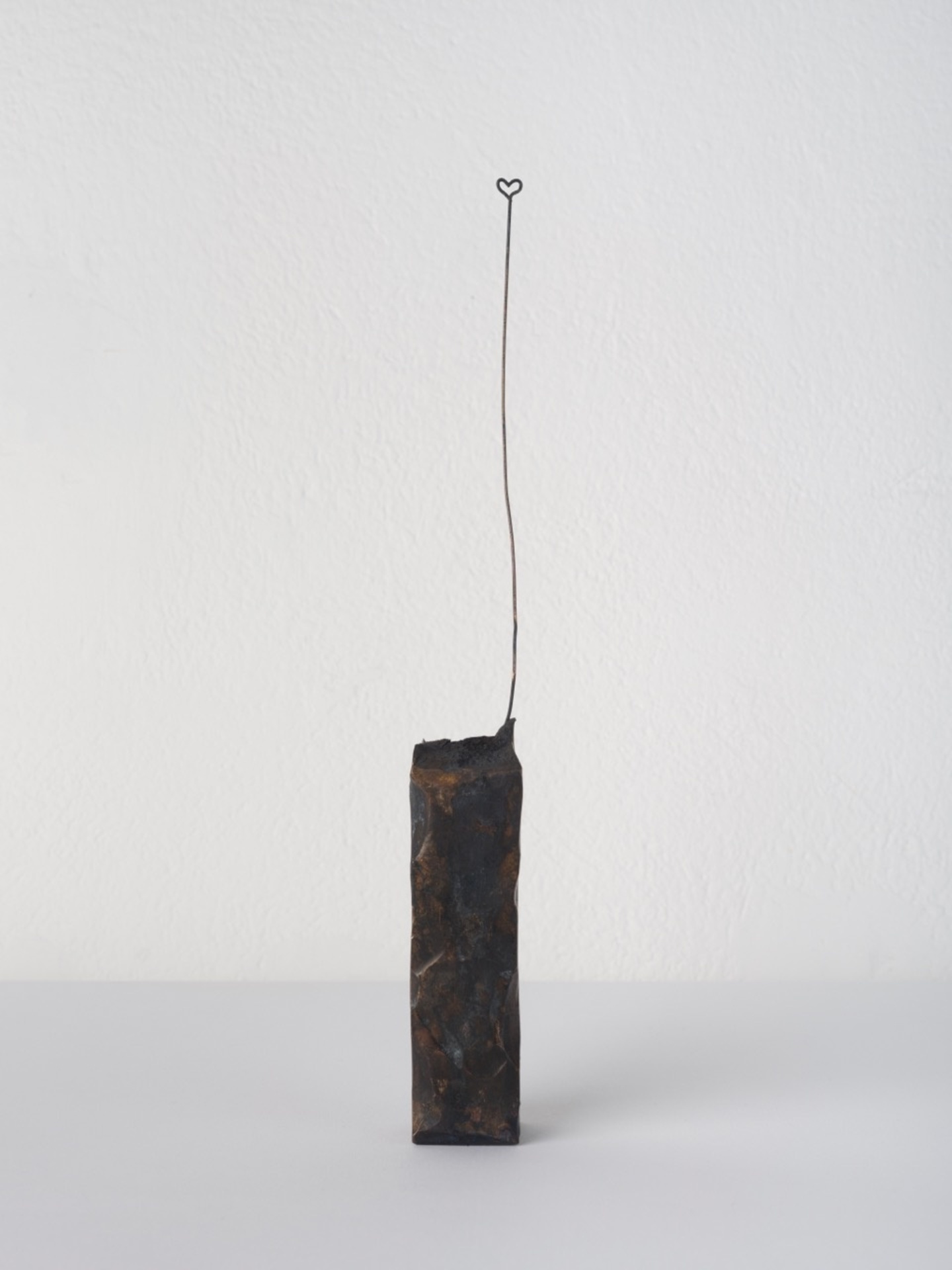
En découvrant dans les réserves de la Fondation Giacometti les structures métalliques qui donnèrent naissance aux sculptures de Giacometti après-guerre, Halilaj a été marqué par leur proximité tant avec les sculptures de l’artiste qu’avec son propre vocabulaire de formes. C’est le cas de ses « Abetare » et ses sculptures filiformes comme Pour te rappeler – Struthio Camelus (2024).
Halilaj parle des armatures de Giacometti en ces termes : « Il y est question de l’essence de la sculpture et de ses limites. J’ai été frappé en voyant le choix des tiges qui composent l’armature ; ça dit quelque chose sur le moment où une sculpture devient une sculpture. Je vois un lien fort entre son langage et le mien dans ces deux lignes qui constituent l’essence de tant de sujets : des lignes noires monochromes qui deviennent un dessin dans un espace. Je suis très intéressé par l’idée d’une sculpture qui ne prend pas de volume. »
À la manière des structures essentielles de Giacometti sur lesquelles vient s’agréger la matière, les œuvres de Halilaj, comme Peut-on faire quelque chose ensemble, simplement ça, et ensuite libre pour toujours (blanc)(2011), emploient des formes légères, telles des brindilles et des plumes, et suggèrent une légèreté de la sculpture qui peut aller jusqu’au vide ou à l’évocation d’une disparition prochaine.
Halilaj le commente ainsi : « Je pense à ses variations d’échelle et de formes, tantôt réalistes, tantôt plus abstraites, au bord de la disparition. »
Chez Halilaj, beaucoup d’œuvres agrandissent des dessins d’enfant en des dimensions presque monumentales. Chez Giacometti, l’échelle des œuvres est une donnée essentielle. Il manifeste dans son travail une prédilection pour la petite taille, si bien qu’entre 1958 et 1961, il se confronte à une difficulté lorsqu’il doit réaliser pour la Chase Manhattan Plaza, à New York, des sculptures de très grandes dimensions.
Comme il avait pu l’exprimer dans les projets de monuments des héros de la résistance (Rol Tanguy, Gabriel Péri), Giacometti traduit la grandeur de l’homme dans une forme d’humilité et dans des tailles modestes, voire très modestes. Pour lui, comme pour Halilaj, dans l’échelle des petites choses peut s’exprimer toute la force de l’existence humaine.
[1] Alberto Giacometti, entretien avec Jean Clay [1963], Écrits. Articles, notes et entretiens, Paris, Hermann/Fondation Giacometti, 2008, p. 315. Jean Clay, « Alberto Giacometti. Le long dialogue avec la mort d’un très grand sculpteur de notre temps », Réalités, n° 215, décembre 1963, p. 135-144.
“Children have such confidence… They think they are here forever. Who, in reality, doesn’t look like they think they are here for ever? Everything became precarious for me at twenty. [1]”
Alberto Giacometti, 1963
The exhibition “We built a fantastic palace at night…” presented at the Institut Giacometti, places the works of contemporary artist Petrit Halilaj and those of Alberto Giacometti side by side in dialogue.
Marked since childhood by the war in his native Kosovo, Petrit Halilaj developed a practice in which individual and collective stories meet. Gradually, drawing, and in particular children’s drawing, has become a language of choice for him, a language to keep alive. In 2015, he found his way into it again by creating a new graphic lexicon in which he transforms children’s drawings into drawings in space. He calls them “Abetare”, a word taken from a manual for teaching the alphabet to Albanian-speaking children, widely used in Kosovo.
In 1932, Giacometti copied a children’s drawing seen on the pavement in his neighbourhood, on avenue Villemain in the 14th arrondissement, in Paris. From that drawing, Halilaj imagines a dialogue and shows the presence of the theme of childhood in his elder’s oeuvre through some thirty works especially created for the exhibition.
Relating to a text by Giacometti on his work The Palace at 4 a.m. (1932), the exhibition and its title explore the dynamics of the fantastic and fragile constructions of the works of both artists. In an original installation devised by Halilaj, the exhibition weaves a subtle network of connections between Giacometti’s works. Halilaj’s drawing extends and combines children’s drawing and Giacometti’s to offer them to the visitors. From one hand to another, the drawing is a vector of dialogue between people and their imaginaries that the artist develops in shapes rather than in words. It works at opening up the imagination without imposing any meaning on it.
“What didn’t change from my childhood until now is that when you talk about drawing, you talk about imagination” Halilaj emphasises. Since childhood, the artist has been keeping an intense relationship with drawing, and his art vocation was hastened by the conflict in Kosovo (1998-1999) that tore apart populations and uprooted the young Halilaj from his home village to a refugee camp. Encouraged by the Italian psychologist Giacomo “Angelo” Poli, in the refugee camp of Kukës, in Albania, he attracted people’s attention with his passion for drawing and his skill at drawing with both hands. He found in the medium of drawing the means to process and overcome the traumas of the war.
In Geneva, where he was holed up in 1941 because of the war, Giacometti spent time with his mother and nephew Silvio, of whom he made many portraits, sculpted and drawn. In a few sketchbooks he indulged in an original exercise: he invited the child to draw on the sheets on which his silhouette was sketched. On several sketchbooks, a dialogue developed between the child and his uncle, in a series of delicate drawings made by four hands. Halilaj carries on that graphic dialogue with his niece Luna.
The Palace, a monumental drawing in space, is displayed in the main room of the Institut Giacometti. Like a dream, it associates unrelated moments and ideas, creating a connection between several works by Giacometti, Couple (1926), Mother and daughter (1933), Apollo (1929) and a man in the children’s drawing copied by the artist in 1932.
“I can only talk indirectly of my sculptures, and hope to partially say what inspired me to make them,” Giacometti wrote in 1933, commenting on his work The Palace at 4 a.m. (1932), and he continued: “We built a fantastic palace at night […], a very fragile palace made of matches: one wrong move and part of the tiny construction collapsed; we started it all over again and again.”
Halilaj identified with that precarious form: “ [it] is a thread between all the houses I lived in, and that my family and I lost and were displaced from and tried to rebuild during my life – our house in Runik [Kosovo] after the war, and then in 2010 the family house in Prishtina. For this exhibition, the title came first, this idea of constructing a dream palace to live in. ”
Petrit Halilaj shares with Alberto Giacometti a fondness for the way children look at adults. As a child, Halilaj benefitted from the unconditional support of his mother in his budding art career, as was the case with Giacometti with both his parents. The figure of the father is important for both artists, but in a different way, between reverence and defiance.
Abetare (Giacometti’s Cock) (2025), presents a mocking character that looks up and down a portrait of Giovanni Giacometti, the artist’s father. Abetare (Giacometti’s Love Seat) (2025) is taken from a piece of paper with a drawing in which Giacometti covers his father’s portrait with imaginary sculptures.
In their respective work, both artists keep up a dialogue between drawing and sculpture. In Giacometti’s, some sculptures like Portrait of the father (1927-30) or Walking figure (1927) offer, as in Halilaj’s, a hybrid form between drawing and sculpture.
Discovering the metallic structures that would eventually generate Giacometti’s post-war sculptures in the storerooms of the Fondation Giacometti, Halilaj was struck by their likeness to his own sculptures as much as with his lexicon of forms. That’s the case with his “Abetare” and his spindly sculptures like Here to Remind You (Struthio Camelus) (2024).
Halilaj speaks about Giacometti’s metallic frames in these terms: “talking about the essence of sculpture and going to the limit of it. Selecting the armature stick sculptures was very important for me. It reveals something in the moment before a sculpture becomes a sculpture. I strongly related to how I see his language and mine in just these two lines that are the essence of so many subjects: these black monochrome lines that become a drawing in a space. I am very interested in the idea that as a sculpture it doesn’t take up volume.”
Like Giacometti’s main structures on which matter is added, Halilaj’s works like Can we do something together, just this and free forever (White) (2011) make use of light shapes like twigs and feathers, suggesting a lightness in the sculpture that can go as far as emptiness or the evocation of a near disappearance.
Halilaj comments on it: “this resonates with me in his variation of scale and forms, sometimes being realistic, sometimes becoming abstract, on the verge of disappearing. ”
In Halilaj’s work, many pieces make use of children’s drawing enlarged to almost gigantic proportions. In Giacometti’s, the scale of works is an essential feature. In his work, he favoured the small format, so much so that between 1958 and 1961, he ran into difficulties when he had to make sculptures in huge dimensions for the Chase Manhattan Plaza in New York. As he explained concerning the projects of monuments to the heroes of the Resistance (Rol Tanguy, Gabriel Péri), Giacometti conveyed the greatness of men in a form of humility and in modest, if not very modest, formats. For him, as for Halilaj, all the intensity of human existence can be expressed within the scale of small works.